A South American Telco
From Fragmented Systems to Seamless Service
Consolidating a nine-system retail operation into one agent workspace.
The Moment
"I just need to sit for a few minutes."

Maria came to the store with her daughter to buy a plan and a device. The interaction took over 30 minutes. She could not stand that long. She kept walking back to the seating area to rest, then returning to the counter, visibly exhausted.
We watched this happen. It was not an exception.
The Problem in Numbers
Research
On the ground, in three stores.
Store observations, live customer interactions. 10 in-depth interviews across 5 roles, from CSRs to a regional manager. Current journeys mapped step by step with the people who run them.
Method
4 hero flows, the store's most frequent requests. Every step interrogated.
Buy an Accessory
Replace Equipment
Change Plan
Bill Query
For each step: the system used, the pain point, the opportunity.
One Journey Up Close, Replace Equipment
A customer comes to upgrade his old device.
Recurring pain
Agents pull customer information from multiple, disconnected sources. Progress depends on warehouse and supervisor responses.
Recurring opportunity
Provide an integrated, up-to-date device catalog. Present supporting sale information upfront.
Synthesis
What agents need to know upfront.
The same core information came up in every journey we mapped. Six categories recur across all four hero flows.
| Information the agent needs upfront | Buy an Accessory | Replace Equipment | Change Plan | Bill Query |
|---|---|---|---|---|
| Customer Profile & Identification | ||||
| Device Information | ||||
| Usage | ||||
| Plan & Services | ||||
| Bill & Payments | ||||
| Recent Interactions |
One insight solve the information problem once, and every journey gets faster.
Design Principles
The rulebook for every decision that followed.
Connect the ecosystem
One integrated flow instead of nine destinations
Minimize system interactions
To maximize human ones
A shared experience
One screen that works for agent and customer together
Automate the routine
So agents handle the complex
Surprise me, don't just fix me
Proactive insights, not just data
The Concept
Everything the agent needs, one glance.
Designed for tablet: the agent can leave the desk and serve the customer wherever she is.
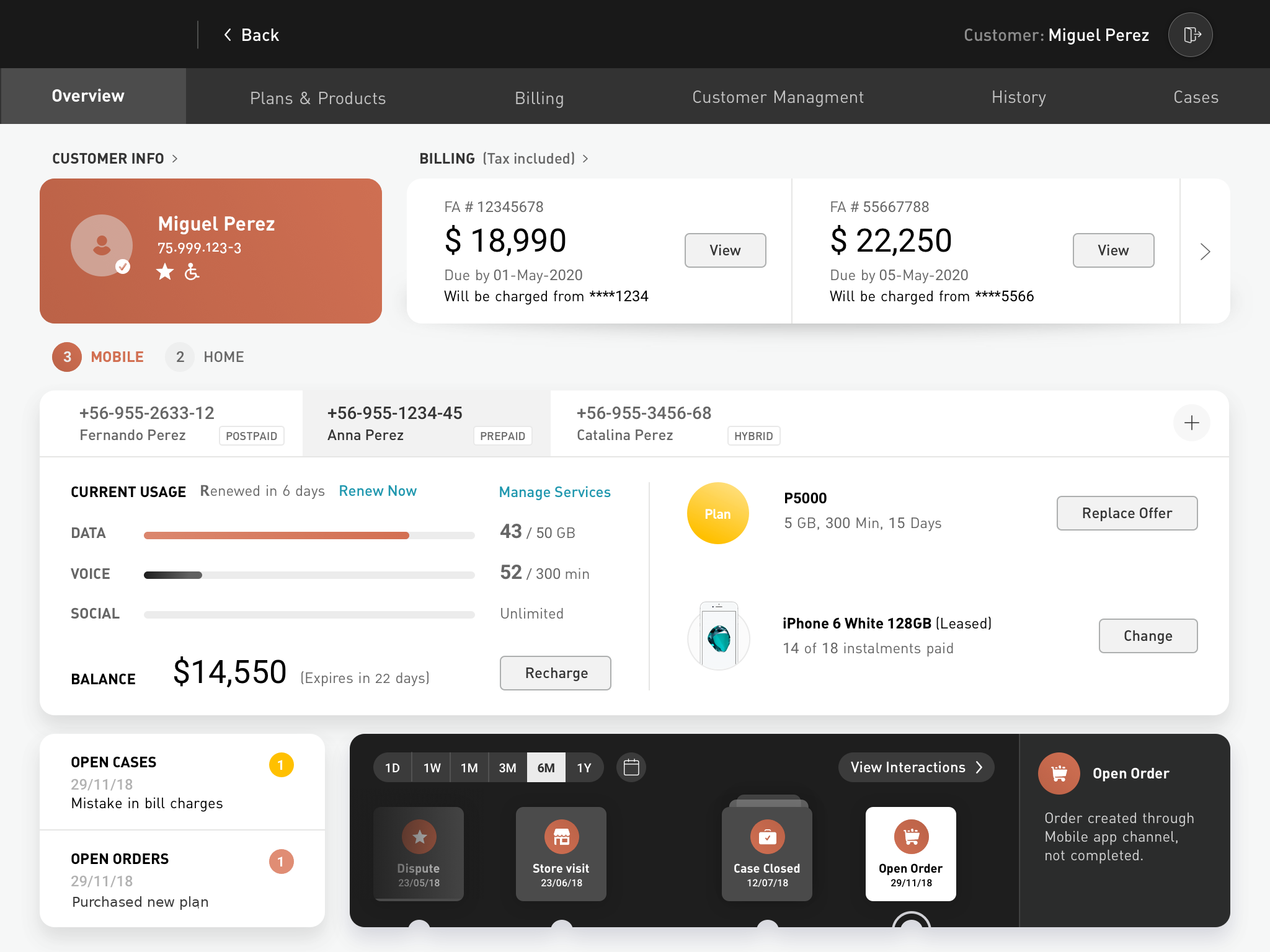
- Identity and verification
- Billing at a glance
- Lines, plans, and devices with eligibility indicators
- Live usage
- Open cases and orders
- Interaction timeline
The Concept in Practice
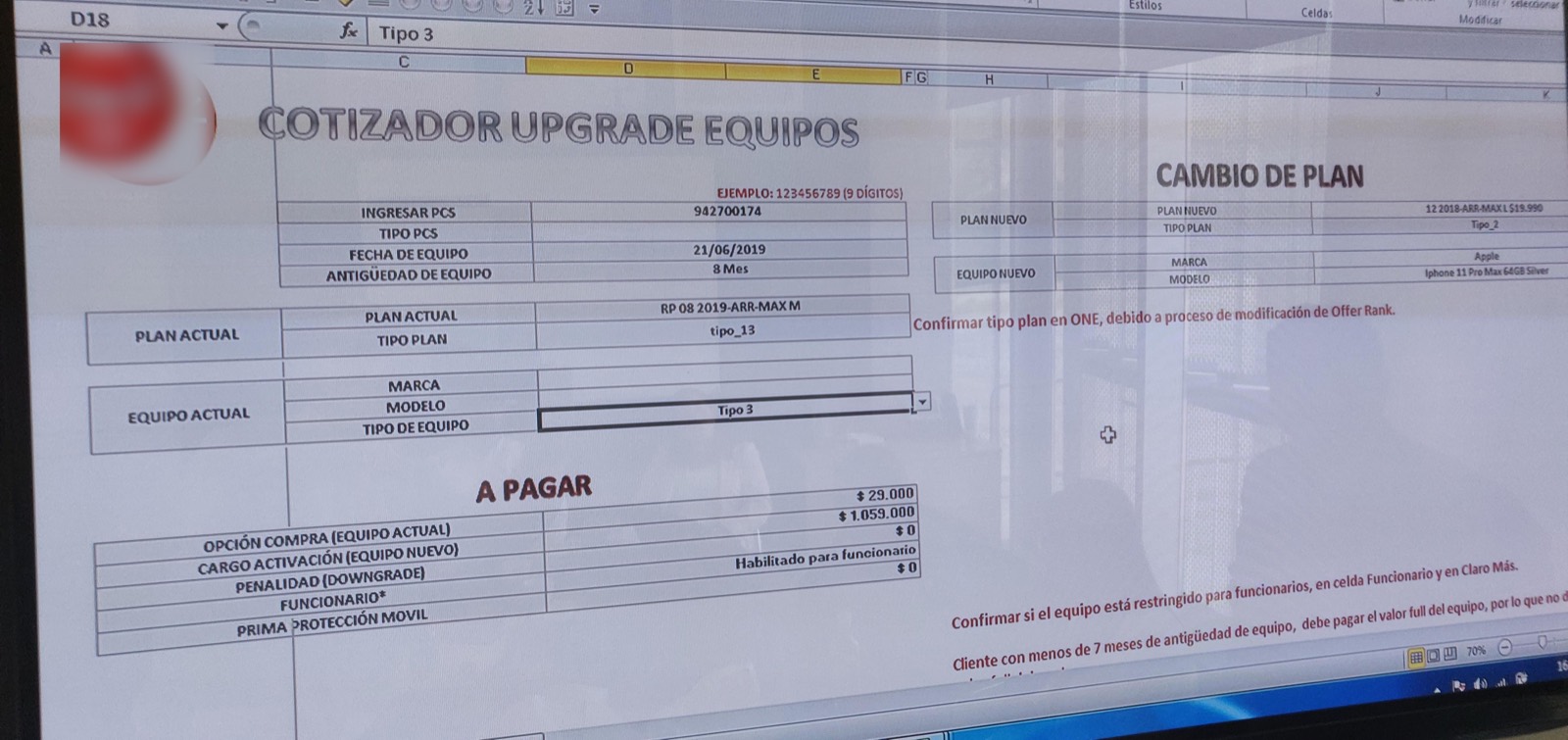
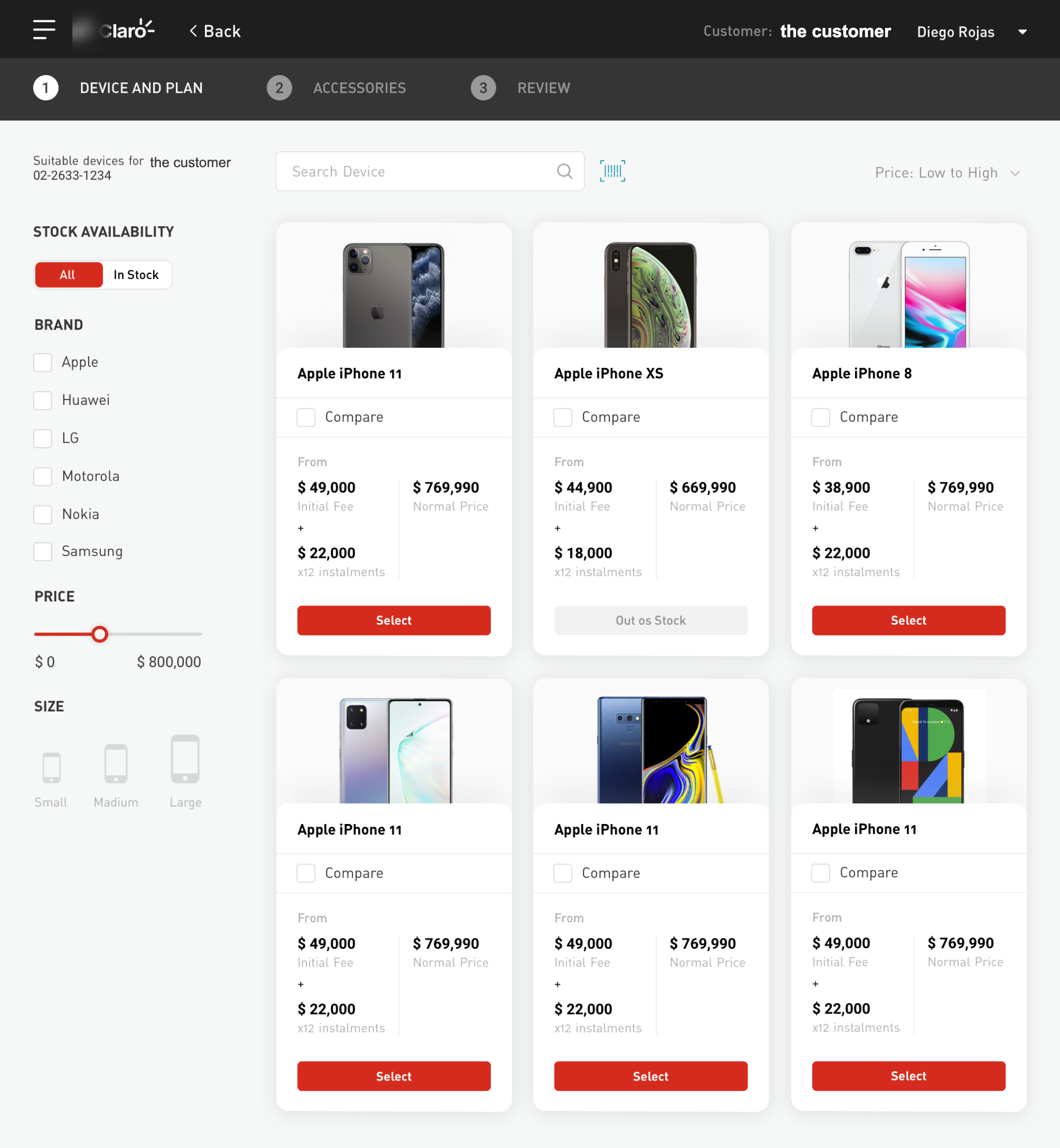
From a spreadsheet to a device catalog.
Outcome
Approved. Built. In production.
Concept approved by the client. We designed the hero flows and moved into detailed design. The system is live in production today.
The best design decision was to simplify: fewer systems, fewer steps, fewer workarounds.